WPC Doors vs Laminate Doors – Which Is Better for Bathrooms in 2026?
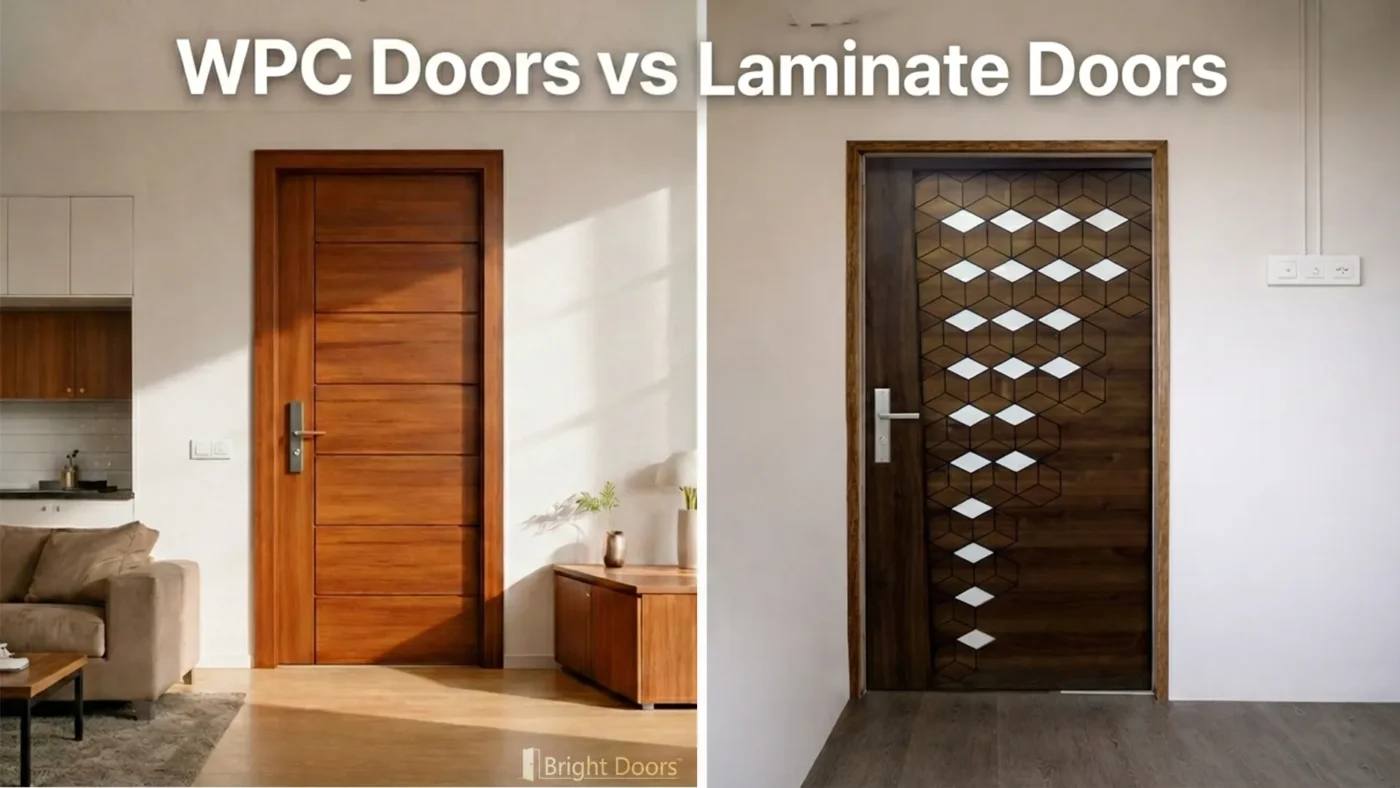
When choosing doors for your home, especially in areas prone to moisture like bathrooms or kitchens, the decision between WPC (Wood Plastic Composite) doors and laminate doors is crucial. Many homeowners face confusion here, as both options appear modern and affordable at first glance. However, misconceptions abound—particularly the belief that laminate doors are fully waterproof. In reality, while laminate surfaces offer some resistance, the underlying structure often fails under continuous water exposure, leading to peeling, swelling, and high maintenance costs.
This article dives deep into the differences, backed by expert insights and real-world comparisons, to help you make an informed buying decision. As a company specializing in WPC doors, we at Bright Doors recommend WPC for its superior performance, but we’ll present the facts so you can decide.
Whether you’re renovating anywhere in India, understanding these materials can save you time, money, and frustration. Let’s explore why WPC doors often emerge as the better long-term choice for durability and ease of use.
__Table of Contents
What Are Laminate Doors?
Laminate doors are basically flush wooden doors covered with a decorative laminate sheet on the surface. The inner core is usually plywood, MDF, or block board, which is not waterproof.
Common Problems with Laminate Bathroom Doors:
- Bottom area gets damaged first due to regular water contact
- Laminate sheet starts peeling or bubbling
- Inner flush door absorbs moisture and expands
- Door becomes tight and does not close properly
- After 6–8 months, carpenter trimming is required
- Color fades and surface looks dull
In short: laminate doors look good initially but require high maintenance in bathrooms.
What Are WPC Doors?
WPC doors are made from a blend of wood fiber + plastic polymer, creating a fully waterproof solid-core material.
At Bright Doors, our WPC bathroom doors are:
- 28MM thick solid boards
- 100% waterproof
- Termite & borer proof
- Available in UV wood texture prints
- CNC groove and router designs
- Solid color & matte finishes
They are built for direct water exposure.
Key Differences Between WPC and Laminate Doors
While both doors serve similar purposes, their compositions lead to stark differences in performance:
- Water Resistance: Laminate doors offer surface-level protection, but the core absorbs moisture, causing expansion and peeling at edges after repeated exposure. WPC doors are fully waterproof, immune to swelling or rotting, even in constant wet conditions.
- Durability and Longevity: Laminate doors may last 4-6 years with care but often need repairs due to fading, chipping, or water damage. WPC doors boast high tensile strength, termite resistance, and a longer lifespan without degradation.
- Maintenance: Laminate requires sealing edges and avoiding water to prevent issues like tight closing after 7-8 months, often needing professional trimming. WPC is low-maintenance, cleanable with water, and doesn’t expand or contract.
- Aesthetics and Customization: Both offer design variety, but laminate can fade over time. WPC maintains color and can be painted or textured for a premium look.
- Eco-Friendliness and Cost: WPC uses sustainable materials and offers better value over time due to reduced repairs. Initial costs are similar, but laminate’s hidden maintenance fees add up.
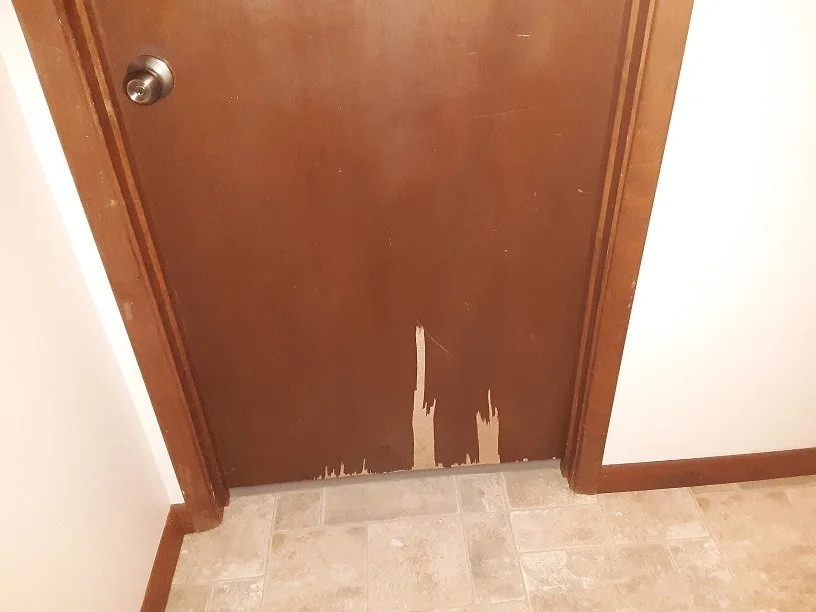
(These images illustrate common water damage on laminate doors, highlighting peeling at the bottom— a frequent issue avoided with WPC.)
Comparison Table: WPC vs Laminate Doors
| Feature | Laminate Door | WPC Door |
|---|---|---|
| Waterproof Rating | Surface only (edges/core fail) | 100% throughout |
| Core Material | Wood/plywood core + thin laminate sheet | Wood fibers + thermoplastics (composite) |
| Bottom Edge After 1 Year | Peeling, bubbling, chipped laminate | Perfect condition |
| Door Swelling | Yes (3-6 months) | Never |
| Closing Problem | Door rubs frame; needs carpenter trim | Smooth operation always |
| Color After Cleaning | Faded, stained | Bright and fresh |
| Termite Risk | High (wood core) | Zero |
| Eco-Friendliness | Uses more natural wood resources | Recyclable, reduces wood usage |
| Lifespan in Bathroom | 4-6 years | 20+ years |
| Total Cost (10 Years) | Door + 3-4 repairs | Door only |
| Best For | Dry interiors like bedrooms | Bathrooms, kitchens, humid areas |
Why WPC Is the Better Option
- Truly waterproof – no swelling, no peeling
- Solid inside – no hollow or wooden core
- No carpenter visits
- Long lifespan
- Premium modern look
- Works with wood, cement, granite, steel frames
🔗 Related Read: Why WPC Bathroom Doors Are the Best Choice for Indian Homes in 2026
Final Verdict
Laminate doors are designed for dry interiors, not wet bathrooms. Regular water contact leads to swelling, peeling, trimming, and repeated maintenance.
If you want a door that never expands, never peels, and never needs repair, WPC doors are the smartest and most economical choice for bathrooms in 2026.
👉 Explore Our Collection: https://brightdoors.in/wpc-bathroom-doors
FAQ
Are laminate doors waterproof?
No. Only the surface is laminated. The inner flush door absorbs water and gets damaged.
Which is better for bathrooms – WPC or laminate?
WPC is far better due to waterproof structure, zero maintenance, and long lifespan.
Why does laminate peel at the bottom?
Continuous water contact breaks the glue bond, causing the sheet to come out.
Why does my laminate door feel so tight to close after a few months?
This is because the inner wooden core has absorbed moisture and expanded. You will likely need a carpenter to trim the edges to make it fit again—a problem you will never have with WPC.
How long do WPC doors last compared to laminate?
WPC can last 15-50 years with minimal care, while laminate typically needs replacement after 4-6 years in moist areas.
Do WPC doors expand in water?
No. WPC doors are fully waterproof and dimensionally stable.
Do WPC doors look as good as laminate doors?
Absolutely! Modern WPC doors come in premium wood-grain finishes and UV-protected colors that look even better than laminate and never lose their shine.
Do laminate doors require special maintenance?
Yes, avoid prolonged water contact and seal edges regularly to prevent issues.
Which is more eco-friendly?
WPC, as it uses recycled materials and lasts longer, reducing waste.